
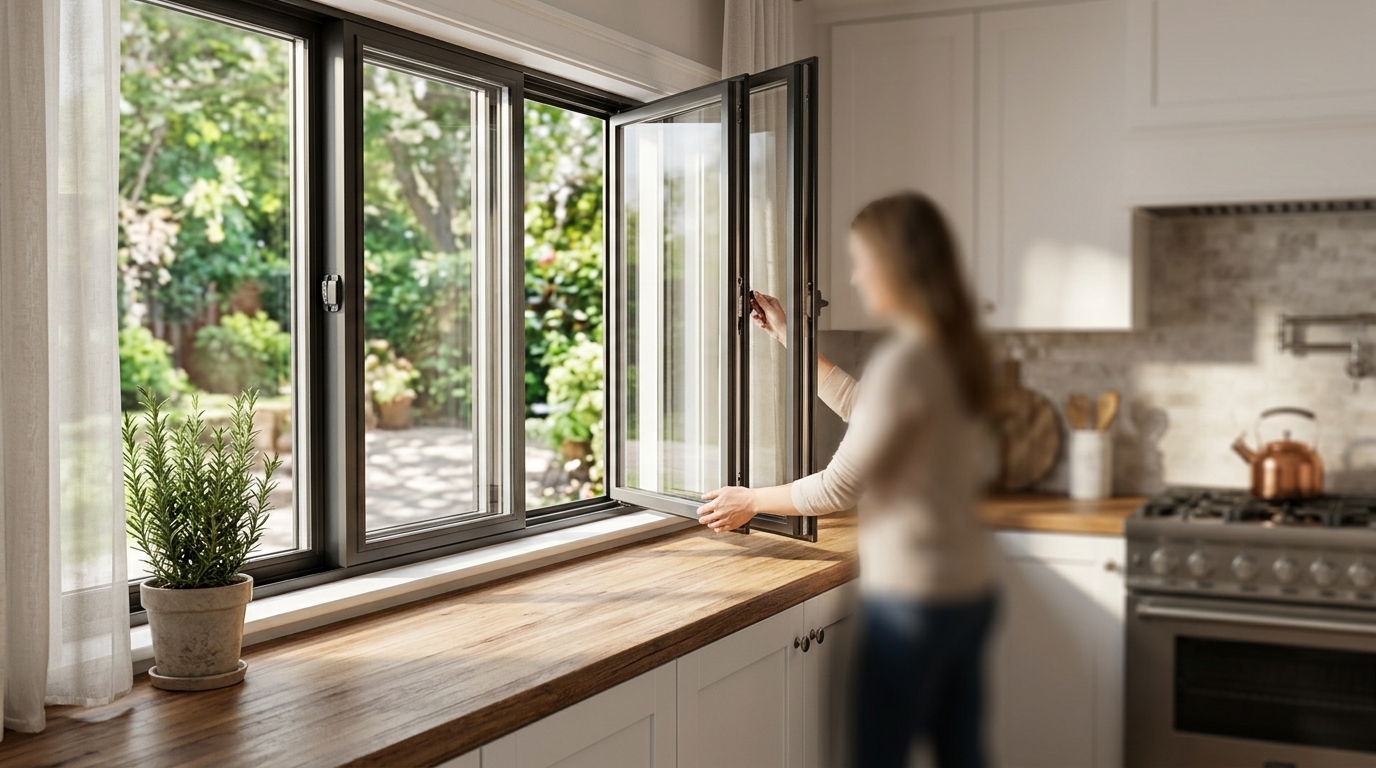
Choosing the right windows for a kitchen renovation requires a focus on airflow and moisture control. Proper ventilation prevents condensation, reduces odors, and maintains indoor air quality. Delerio Construction helps Central Valley homeowners select windows that balance energy efficiency with practical ventilation needs.
1. Operable Sash Design
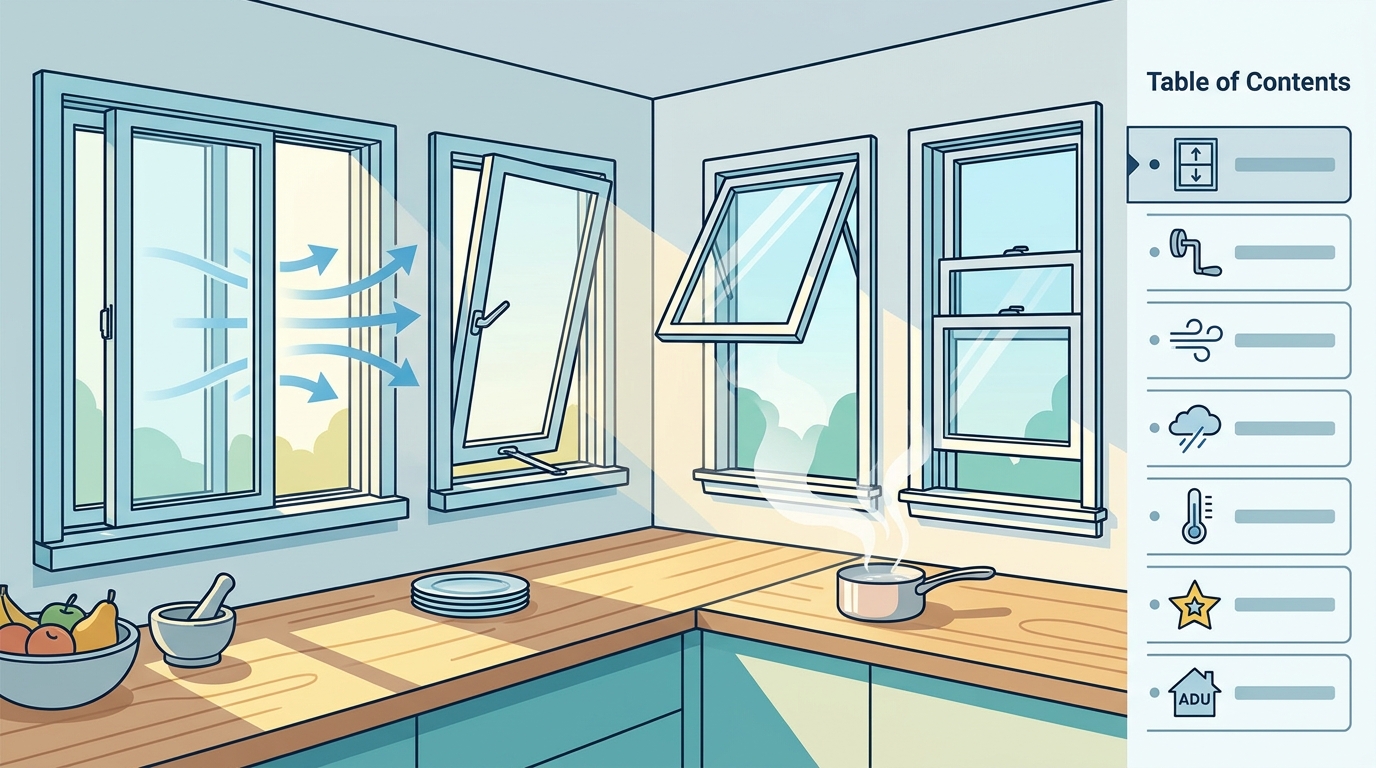
Choose windows that open to create a direct path for air exchange. Double-hung windows allow both the top and bottom sashes to move, creating a chimney effect that pulls cool air in and pushes hot air out. Casement windows swing outward on hinges, offering unobstructed airflow and easy cleaning. This physical movement is the most fundamental ventilation feature in any kitchen window selection. For additional details, review the Contact Us Fresno Renovations.
2. Integrated Ventilation Screens
Select screens that allow airflow while keeping insects out. Standard fiberglass or aluminum screens are essential for kitchens where you want to open windows during cooking. Look for screens with a high airflow rating to ensure that opening the window does not significantly restrict the volume of air moving through the room. This feature is critical for maintaining comfort during hot Central Valley summers. For additional details, review the DC Home Improvements Customer.
3. Low-E Glass Coatings
Use Low-E coatings to manage heat gain without sacrificing light. Low-E glass is a thin, transparent coating applied to window panes that reflects infrared light. In a kitchen, this helps keep the space cooler by reducing solar heat gain, which reduces the load on your HVAC system. This feature supports ventilation by preventing the window from becoming a heat source that requires constant mechanical cooling.
4. Multi-Pane Insulation
Opt for double or triple-pane glass to reduce condensation. Insulated glass units (IGUs) create a barrier that minimizes temperature differences between the interior and exterior. This reduction in temperature variance prevents moisture from condensing on the window surface, a common issue in steamy kitchens. Proper insulation works alongside ventilation to keep the air dry and clear.
5. Airtight Seals and Gaskets
Ensure tight seals to control where air enters and exits. High-quality weatherstripping and gaskets prevent uncontrolled air leakage. When you open a window for ventilation, you want the air to flow through the opening rather than leaking through gaps in the frame. This control allows you to manage the rate of air exchange effectively, ensuring that cooking odors are expelled quickly.
6. Awning Window Configuration
Consider awning windows for rain-resistant ventilation. Awning windows hinge at the top and open outward from the bottom. This design allows you to leave the window slightly open during light rain, providing continuous ventilation without letting water into the kitchen. This is a practical feature for kitchens that need constant airflow but are exposed to weather elements.
7. Smart Ventilation Controls
Choosing the Right Ventilation Feature
Selecting the right window depends on your specific kitchen layout and climate needs. For most Central Valley homes, a combination of operable sashes and high-quality insulation provides the best balance of comfort and efficiency. Delerio Construction offers expert guidance to help you choose the right configuration for your home.
Frequently Asked Questions
Do kitchen windows need to be operable?
While not strictly required by code in all areas, operable windows are highly recommended for kitchens. They provide natural ventilation that helps remove cooking odors and excess moisture, which is difficult to achieve with fixed windows alone.
What is the best window type for kitchen ventilation?
Double-hung and casement windows are generally the best choices for kitchen ventilation. Double-hung windows offer flexible airflow control, while casement windows provide maximum unobstructed airflow when fully open.
How do windows help with kitchen humidity?
Windows help manage humidity by allowing moist air to escape the kitchen. When combined with proper insulation, they prevent condensation on the glass and help maintain a comfortable indoor environment.
Are energy-efficient windows good for ventilation?
Yes, energy-efficient windows can be very good for ventilation. Features like Low-E coatings and airtight seals ensure that when you do open the window, the airflow is controlled and effective, without compromising the window's insulating properties.
Can I install windows in a kitchen without a range hood?
Yes, windows can serve as a primary ventilation method if a range hood is not installed. However, it is important to choose operable windows that can be opened to create a direct path for air exchange to effectively remove smoke and odors.