
Casement Windows: The Ventilation Powerhouse
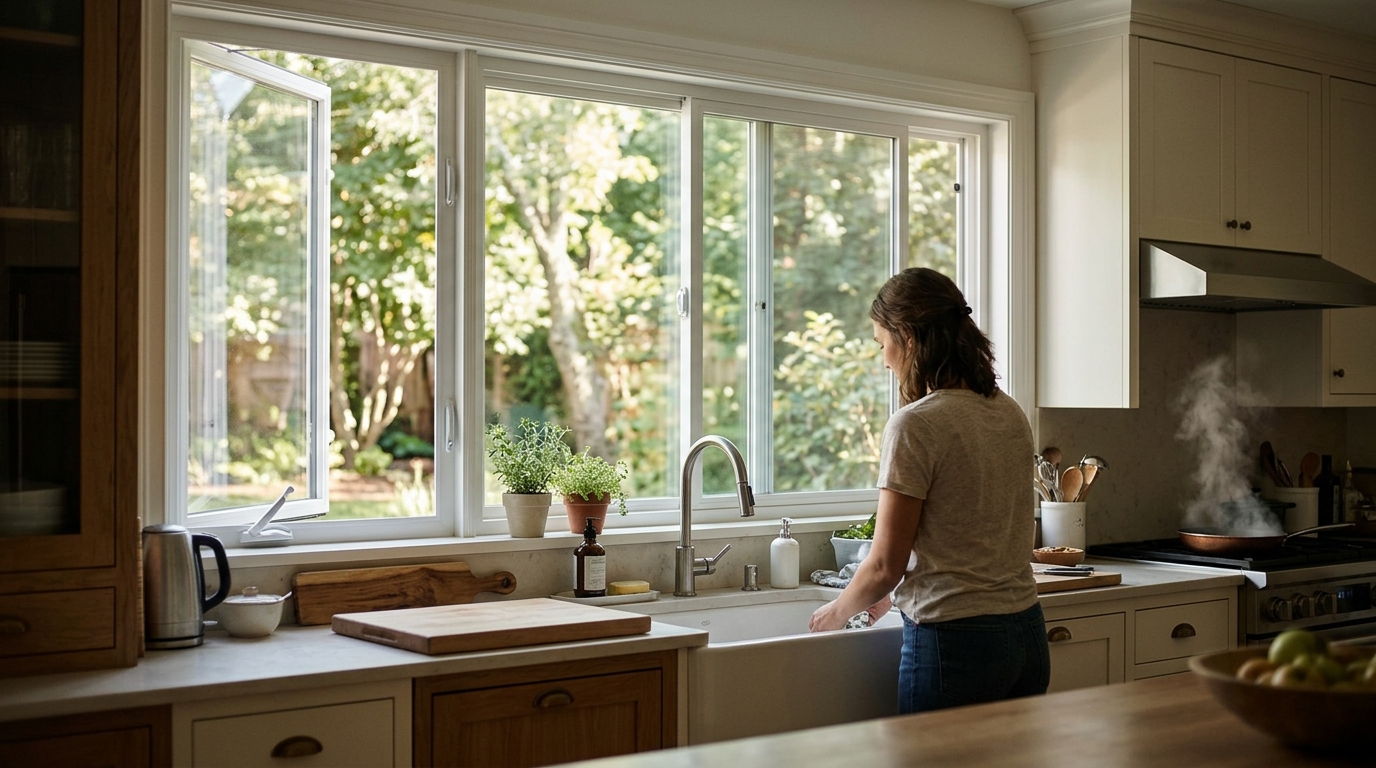
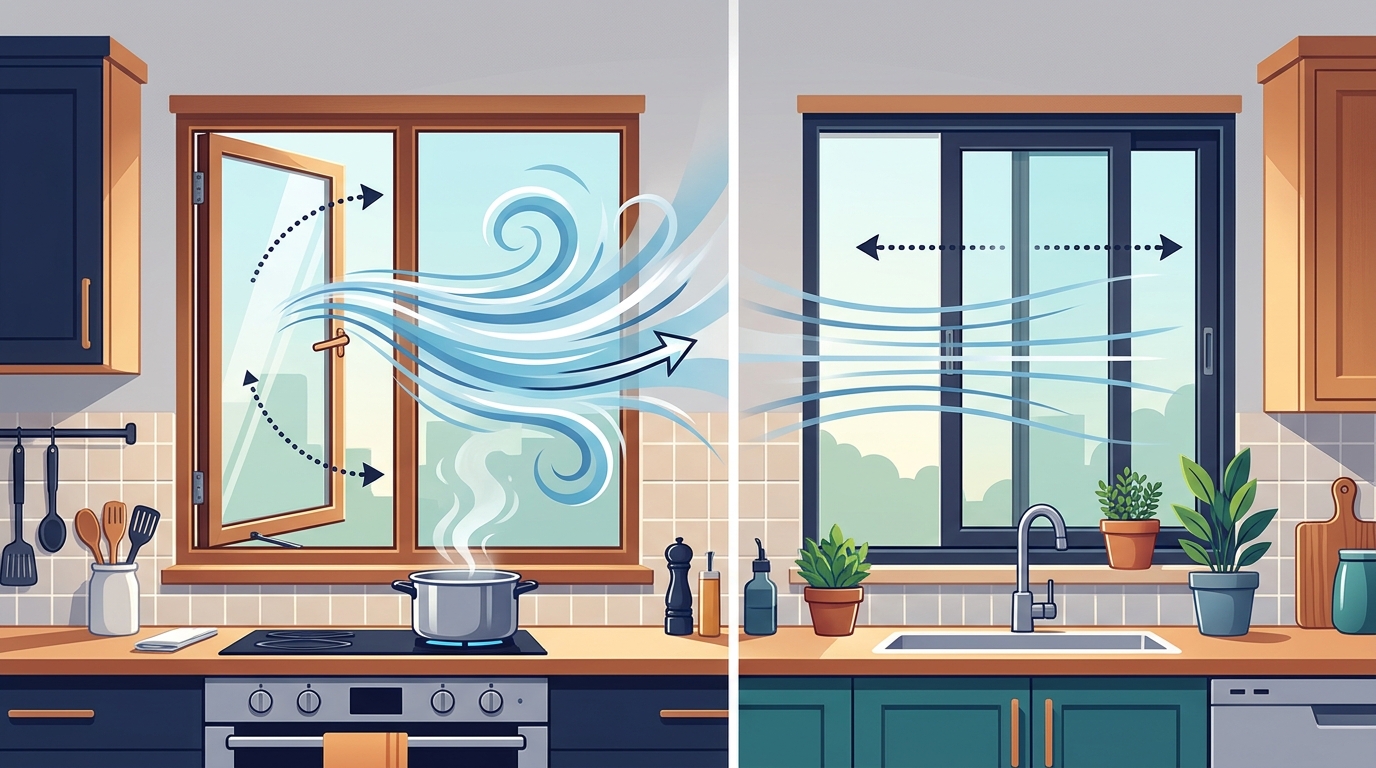
Casement windows are hinged on the side and open outward, allowing the entire sash to swing open. This design is mechanically superior for ventilation because it directs air out of the room rather than just moving it sideways. When you open a casement window, it acts like a fan, pushing stale air and heat away from the interior. This is particularly useful in kitchens where you need to clear out steam and strong odors quickly.
The ability to angle the window is a key feature. You can open a casement window slightly to create a gentle breeze or fully open it for maximum airflow. This level of control is difficult to achieve with other window types. In a kitchen renovation, this means you can manage the environment precisely. If you are frying food, you can open the window fully to exhaust the heat. If you are just washing dishes, you can crack it open for a light air exchange.
DC Home Improvements offers a variety of window styles that integrate well with modern kitchen designs. Their team can help you determine if the exterior wall space allows for the outward swing of a casement window. This is a critical planning step, as the window must have clear space outside to open fully. If your kitchen faces a patio or a walkway, you might need to consider the swing direction carefully.
Sliding Windows: The Practical Alternative
The main advantage of sliding windows is their simplicity. They do not require exterior space to open, making them ideal for kitchens that face tight spaces, such as a narrow walkway or a neighboring building. They are also easier to clean because the sashes often tilt inward. However, the airflow is less directional. Air moves through the opening, but it does not have the same pushing force as a casement window. This makes sliding windows better for passive ventilation, where you want a steady, gentle flow of air without a strong draft.
When considering sliding windows for a kitchen, you should look at the track quality. A high-quality sliding window will have a smooth track that allows the sash to move easily, even with the weight of the glass. DC Home Improvements provides replacement windows that are built for durability and ease of operation. Their installers ensure that the tracks are level and the sashes are balanced, which is essential for long-term performance.
Ventilation Performance Comparison
The following table compares the ventilation characteristics of casement and sliding windows. This helps you understand the trade-offs between the two options for your kitchen renovation.
| Feature | Casement Windows | Sliding Windows |
|---|---|---|
| Airflow Direction | Pushes air out directly | Allows air to pass through |
| Ventilation Control | High (can angle open) | Low (fixed opening width) |
| Exterior Space Needed | Yes (must swing out) | No (slides horizontally) |
| Cleaning Ease | Moderate (tilts in) | High (tilts in) |
| Best For | Active odor and heat removal | Passive airflow and tight spaces |
Choosing the Right Window for Your Kitchen
Choosing between casement and sliding windows depends on your specific kitchen layout and ventilation needs. There is no single best option for every home. The right choice balances airflow performance with practical constraints.
Choose casement windows if you need maximum ventilation. This is the best option if you cook frequently and need to clear out smoke and odors quickly. Casement windows are also ideal if you have exterior space for the window to swing open. They provide the most control over airflow, allowing you to adjust the breeze to your liking.
Choose sliding windows if you have limited exterior space. If your kitchen window faces a walkway, a patio, or a neighboring structure, sliding windows are the safer choice. They are also a good option if you prefer a simpler, more traditional look. Sliding windows are easier to operate and maintain, which is a plus for busy households.
DC Home Improvements can help you evaluate your specific situation. Their design team will assess your kitchen layout and recommend the window type that best fits your needs. They offer a range of styles and finishes to match your kitchen design. Whether you choose casement or sliding windows, you can expect high-quality products and professional installation.
Frequently Asked Questions
Do casement windows provide better ventilation than sliding windows?
Yes, casement windows generally provide better ventilation because they push air out of the room. This creates a stronger draft that is more effective at clearing cooking odors and heat. Sliding windows allow air to pass through, but they do not have the same directional force.
Can I use a casement window if my kitchen faces a patio?
You can, but you must ensure there is enough space for the window to swing open. If the patio is narrow or has furniture, the window might not open fully. In this case, a sliding window or an awning window might be a better choice. Always check the exterior clearance before ordering.
Are sliding windows harder to clean than casement windows?
Not necessarily. Both types of windows often have sashes that tilt inward for cleaning. However, sliding windows have a track that can collect dust and debris. You should clean the track regularly to ensure the sash moves smoothly. Casement windows have fewer moving parts, which can make them slightly easier to maintain.
Which window type is more energy efficient?
Both casement and sliding windows can be energy efficient if they are well-made and properly installed. Casement windows often have a tighter seal because the sash presses against the frame when closed. Sliding windows can also be efficient, but the track can be a potential point of air leakage. Look for windows with a high U-factor and low air leakage rating.
Can I switch from sliding to casement windows later?
Yes, but it is a significant renovation. You will need to modify the window opening and the exterior wall. This is more expensive and time-consuming than replacing a window with the same type. It is best to choose the right window type during your initial kitchen renovation to avoid future costs.
How does window placement affect ventilation?
Window placement is crucial for ventilation. For the best airflow, you should have windows on opposite walls or adjacent walls. This creates a cross-breeze that moves air through the room. If you only have one window, a casement window is more effective because it can push air out. If you have multiple windows, sliding windows can work well for passive ventilation. Learn more: Contact Us Fresno Renovations.