
Homeowners in Fresno, Clovis, and the broader Central Valley are increasingly prioritizing bathroom upgrades to boost property value and daily comfort. However, data from the National Association of Realtors indicates that small bathroom renovations often yield the highest return on investment, yet nearly 40% of homeowners report regretting their choices due to avoidable errors. This statistic highlights a critical gap between budget allocation and execution quality. When you invest in a remodel, you expect durability and style, not costly repairs within a year. The unique climate of the Central Valley, with its intense heat and seasonal humidity shifts, demands specific material and design choices that differ from coastal or northern regions. Ignoring these local nuances can lead to premature wear, mold growth, and functional failures. This guide outlines the most common pitfalls and provides actionable strategies to ensure your renovation succeeds. (About Us Fresno Remodeling)
Ignoring the Central Valley Climate Impact
The Central Valley experiences extreme temperature fluctuations that directly affect building materials. Wood-based products, such as vanity cabinets and shelving, can warp or crack when exposed to rapid humidity changes. Material expansion and contraction is a physical reality that must be accounted for in your design phase. (Fresno ADU Accessory Dwelling)
Many homeowners select materials based solely on aesthetics without considering thermal stability. In Fresno and Clovis, the dry summer heat followed by cooler, damp winters creates a stressful environment for standard-grade fixtures. You must prioritize materials that are rated for high-temperature stability and moisture resistance. This includes using marine-grade plywood for vanities and selecting tiles with low water absorption rates. Ignoring these factors leads to gaps in grout lines and warped cabinetry within months of installation. (Blog Fresno Home Improvements)
Overlooking Ventilation and Moisture Control
Ventilation is the most critical yet overlooked component of any bathroom renovation. Without proper airflow, moisture accumulates on walls, ceilings, and mirrors, creating an ideal environment for mold and mildew. According to the Environmental Protection Agency, inadequate ventilation can increase indoor humidity levels significantly, leading to structural damage over time.
Small bathrooms often have limited window space, making mechanical ventilation non-negotiable. A standard exhaust fan is often insufficient for a renovated space with new tile or glass enclosures. You need a fan rated for the specific cubic footage of the room, ideally with a humidity sensor to automate operation. Installing a fan with a timer ensures that moisture is cleared after every shower. This simple step protects your drywall and paint from peeling and prevents the growth of black mold, which can be costly to remediate.
Choosing the Wrong Flooring and Surfaces
Flooring in a small bathroom must balance durability with slip resistance. Many homeowners choose large-format tiles for a modern look, but these can be dangerously slippery when wet. Slip resistance is a safety metric that should never be compromised for aesthetic appeal. Look for tiles with a high coefficient of friction (COF) rating, specifically those rated for wet areas.
Additionally, the grout lines in large tiles can trap dirt and moisture if not sealed properly. In the Central Valley, where dust and pollen are prevalent, maintaining grout cleanliness becomes a chore. Porcelain or ceramic tiles with a textured finish offer better traction and hide minor debris better than glossy surfaces. For a more budget-friendly option, luxury vinyl plank (LVP) or sheet vinyl provides excellent water resistance and comfort underfoot. These materials also expand and contract less than natural stone, making them ideal for the region's climate.
Poor Space Planning and Storage
Small bathrooms require precise spatial planning to avoid a cramped feeling. A common mistake is installing a vanity that is too deep or wide for the available floor space. This reduces the walking area and makes the room feel smaller than it is. Spatial efficiency is the key to making a small bathroom feel open and functional.
Instead of standard vanities, consider floating vanities that are mounted to the wall. This creates visual space under the unit, making the floor area appear larger. It also simplifies cleaning, as there are no legs to navigate around. For storage, utilize vertical space with tall, narrow cabinets or recessed medicine cabinets. Over-the-toilet shelving units can provide additional storage without encroaching on floor space. Every inch of the room must serve a purpose, whether it is storage, movement, or aesthetic appeal.
Neglecting Layered Lighting Design
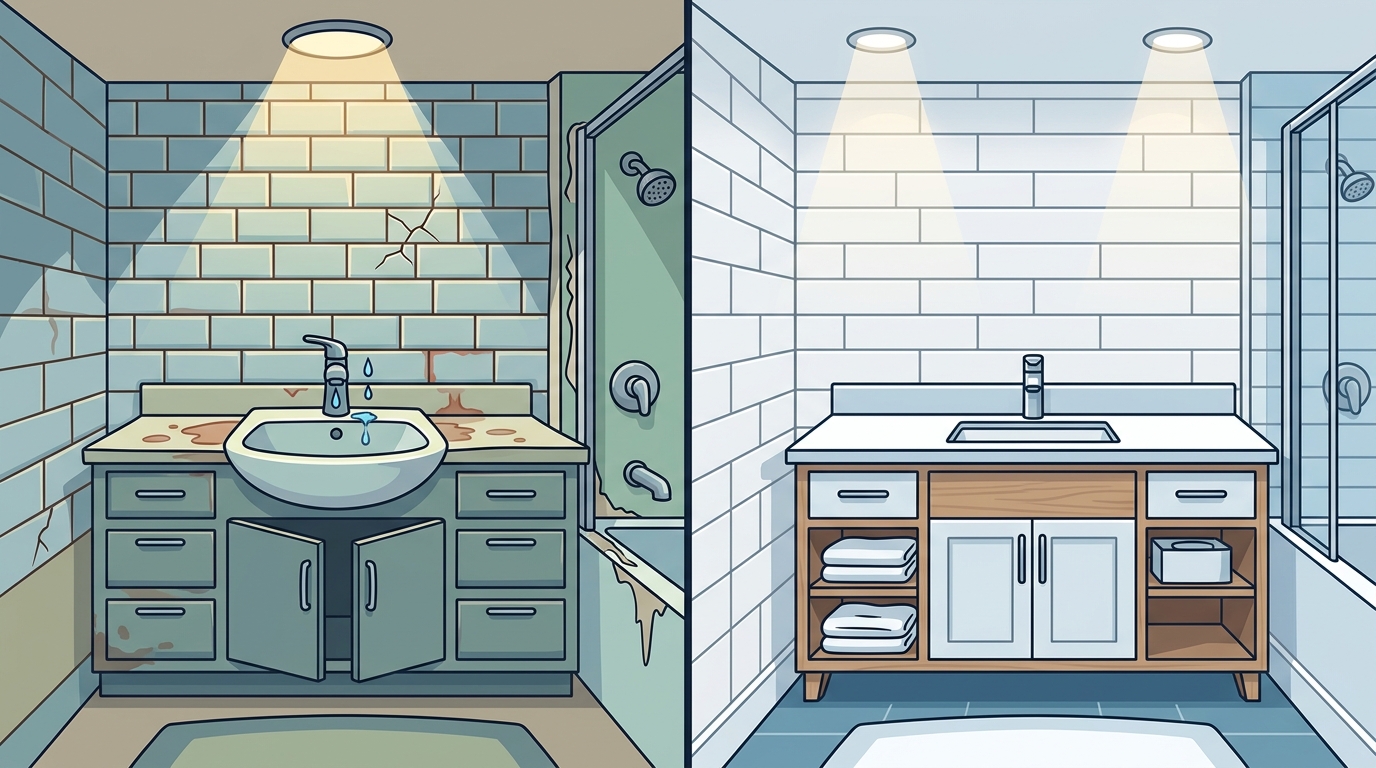
Lighting in a small bathroom should never rely on a single overhead fixture. This creates harsh shadows and makes grooming tasks difficult. A layered lighting approach includes ambient, task, and accent lighting. Ambient lighting provides general illumination, while task lighting focuses on specific areas like the mirror and shower.
Install sconces on either side of the mirror to eliminate shadows on the face. This is crucial for shaving and applying makeup. If wall space is limited, consider a lighted mirror or vertical strips of LED lighting. Accent lighting can be added under the vanity or inside the shower niche to create depth and luxury. Proper lighting not only improves functionality but also enhances the perceived size of the room by eliminating dark corners.
Hiring the Wrong Contractor
The success of your renovation depends heavily on the expertise of your contractor. Many homeowners make the mistake of choosing the lowest bid without verifying credentials or past work. A skilled remodeler understands the local building codes and climate-specific requirements. Quality craftsmanship ensures that your investment lasts for decades.
When selecting a contractor, ask for references and view past projects. Verify that they are licensed, bonded, and insured. In the Central Valley, look for a company with experience in local homes, as they will understand the unique challenges of the area. DC Home Improvements has been serving Fresno, Clovis, and the surrounding communities since 2006. Their team of in-house, background-checked remodelers specializes in bathroom and kitchen renovations that prioritize durability and style. Working with an experienced local expert prevents costly mistakes and ensures a smooth process.
Key Takeaways
- Climate Awareness: Materials must withstand the Central Valley's temperature swings to prevent warping and cracking.
- Ventilation is Critical: Install a high-capacity exhaust fan with a humidity sensor to prevent mold and structural damage.
- Safety First: Choose flooring with a high slip-resistance rating, especially in wet areas like showers.
- Space Optimization: Use floating vanities and vertical storage to maximize the perceived size of small bathrooms.
- Layered Lighting: Combine ambient, task, and accent lighting to eliminate shadows and enhance functionality.
- Expert Hiring: Partner with a licensed, local contractor with a proven track record in the region.
- Long-Term Value: Quality materials and professional installation protect your home's value and reduce maintenance costs.
Frequently Asked Questions
What is the best flooring for a small bathroom in Fresno?
Porcelain tile and luxury vinyl plank (LVP) are the best options. They offer excellent water resistance, durability, and slip resistance, which are essential for the Central Valley climate.
How do I prevent mold in a small bathroom?
Proper ventilation is the primary defense. Install an exhaust fan rated for the room's size and run it during and after showers. Additionally, use mold-resistant paint and seal grout lines annually.
What is the average cost of a small bathroom renovation?
Costs vary based on materials and labor, but a mid-range renovation typically ranges from $5,000 to $15,000. High-end custom projects can exceed $25,000. Financing options are available to manage these costs.
Why is ventilation important in a Central Valley bathroom?
The region's humidity and temperature changes can cause moisture to condense rapidly. Without ventilation, this leads to mold growth and damage to drywall and wood structures.
Can I install a walk-in tub in a small bathroom?
Yes, but it requires careful planning. Walk-in tubs are designed for accessibility and safety, but they need adequate space for installation and door clearance. A professional assessment is recommended.
What is the difference between a bath conversion and a full remodel?
A bath conversion typically involves replacing a bathtub with a shower or vice versa, often using a pre-fabricated unit. A full remodel involves changing the layout, fixtures, and finishes for a complete transformation.
How long does a small bathroom renovation take?
A standard renovation can take 2 to 4 weeks, depending on the scope of work. Custom tile work and plumbing adjustments may extend the timeline.
Start Your Renovation Today
Avoiding these common mistakes ensures your small bathroom renovation is a success. DC Home Improvements offers expert guidance and guaranteed results for homeowners in Fresno, Clovis, Visalia, Sanger, and Madera. Our team specializes in bathroom remodeling, kitchen upgrades, and window replacements. We provide no-interest financing options and comprehensive warranties on all work. Contact us today to schedule your free estimate and transform your bathroom into a functional, beautiful space.