
Understanding Budget Bathroom Flooring
Budget bathroom flooring is defined as materials that cost significantly less than natural stone or high-end hardwood while still meeting moisture resistance standards. In the Central Valley, where humidity can fluctuate and water exposure is constant, the definition of "cheap" must include performance. A material that fails after two years is not actually cheap because it requires replacement. True value comes from materials that resist swelling, warping, and mold growth without premium price tags. according to How to Select For additional details, review the Attention Required Cloudflare.
Homeowners often confuse low initial cost with low total cost of ownership. The most affordable options on a per-square-foot basis may require frequent maintenance or early replacement. This comparison focuses on materials that hold up over time, ensuring your investment lasts. We will evaluate the most common low-cost options available to homeowners in the region. For additional details, review the Attention Required Cloudflare.
Vinyl Plank and Luxury Vinyl Tile (LVT)
Vinyl plank flooring is a synthetic material designed to mimic the look of wood or stone. It is one of the most popular choices for budget bathrooms because it is 100% waterproof. Unlike engineered wood, which can swell if the core gets wet, vinyl does not absorb water. This makes it ideal for shower surrounds and areas where splashing is frequent. For additional details, review the Attention Required Cloudflare.
The main strength of LVT is its resilience. It resists dents and scratches better than many other budget options. However, the quality varies widely. Cheaper vinyl sheets may have a thin wear layer that peels over time. For a bathroom, look for a thicker wear layer to ensure the finish holds up. This material suits homeowners who want a warm, wood-like appearance without the maintenance of real hardwood.
Ceramic and Porcelain Tile
The primary limit of tile is the grout. Grout lines can crack or harbor mold if not sealed properly. This requires periodic maintenance to keep the floor looking clean. Despite this, tile remains a top choice for homeowners who prioritize longevity. It can last for decades if installed correctly. This option suits those who are willing to maintain grout lines in exchange for a hard, durable surface.
Sheet Vinyl and Linoleum
Sheet vinyl is a continuous roll of material that covers the floor without seams. This lack of seams is a major advantage in wet areas because water cannot seep between planks. It is often the most affordable option per square foot. Linoleum, made from natural materials, is another budget-friendly choice that is naturally antimicrobial.
The limitation here is repair. If you cut or tear sheet vinyl, you cannot easily replace a single piece. You may need to replace the entire sheet. This makes it less forgiving than plank options. It suits homeowners with very tight budgets who are comfortable with a uniform look and are careful with their floors. It is a practical choice for guest bathrooms or smaller spaces.
Comparison of Budget Flooring Options
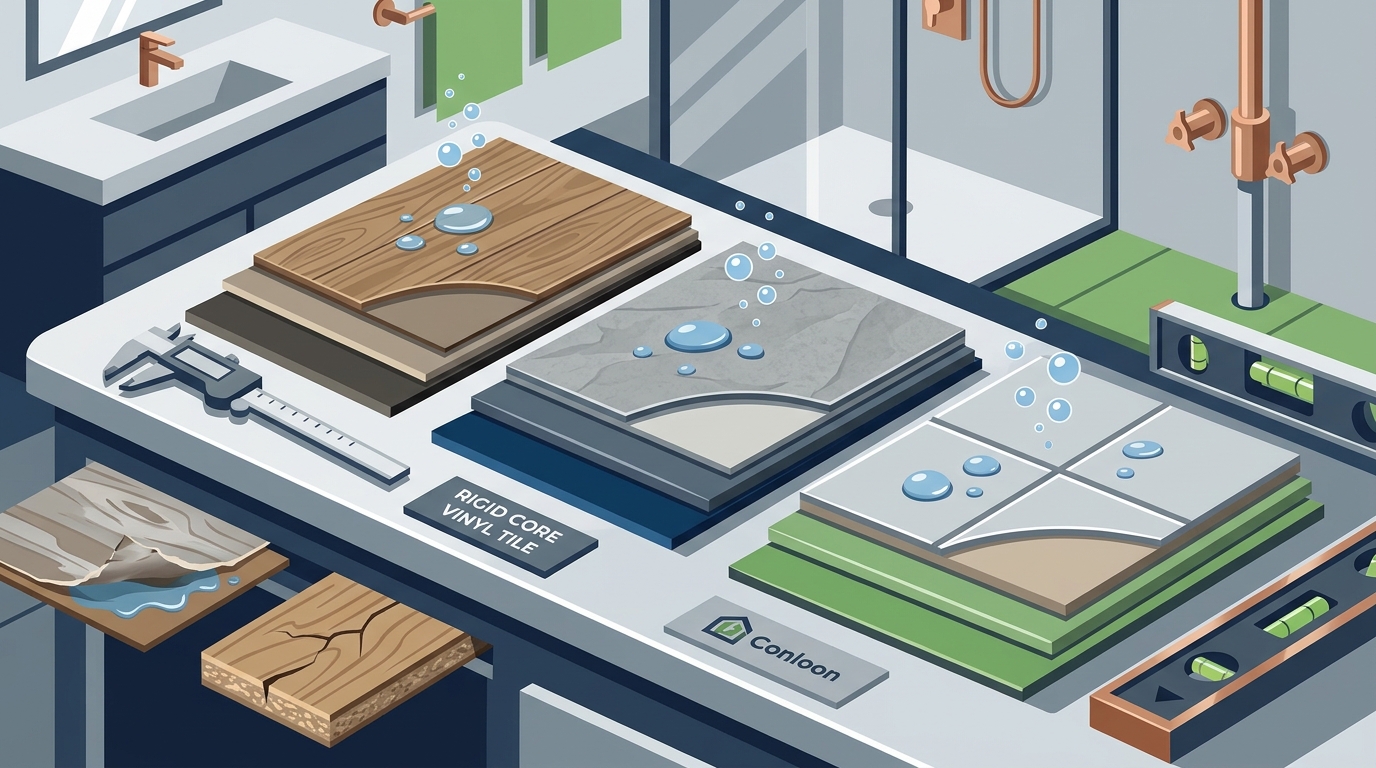
| Material | Water Resistance | Durability | Maintenance | Best For |
|---|---|---|---|---|
| Vinyl Plank (LVT) | 100% Waterproof | High | Low | Wood look, easy install |
| Ceramic/Porcelain Tile | Waterproof (Grout needs sealing) | Very High | Medium (Grout care) | Longevity, high traffic |
| Sheet Vinyl | Waterproof | Medium | Low | Tightest budgets, small rooms |
Choosing the Right Material for Your Home
Choose Vinyl Plank if you want the aesthetic of wood with the practicality of waterproofing. It is among the best option for homeowners who want a modern look and minimal maintenance. It is also easier to install, which can reduce labor costs if you are doing a DIY project.
Choose Ceramic Tile if you prioritize maximum durability and are willing to maintain grout. It is among the best choice for high-traffic primary bathrooms where the floor will be used daily for many years. It holds up well against heavy objects and constant moisture.
Choose Sheet Vinyl if your budget is extremely limited and you need a quick, seamless solution. It is ideal for guest bathrooms or smaller spaces where the risk of damage is lower. It provides a clean, uniform look without the complexity of tiling.
Frequently Asked Questions
Is vinyl flooring safe for bathrooms with high humidity?
Yes, luxury vinyl tile (LVT) is 100% waterproof and does not swell or warp in high humidity. It is a safe and durable choice for Central Valley bathrooms where moisture levels can fluctuate.
How often do I need to reseal ceramic tile grout?
Grout should be inspected annually and resealed every one to three years, depending on usage. Proper sealing prevents water from penetrating the grout lines, which can lead to mold or cracking.
Can I install vinyl plank over existing tile?
In many cases, yes, provided the existing tile is flat, stable, and free of cracks. However, adding a new layer may raise the floor height, which can affect door clearance. It is best to consult a professional for assessment.
What is among the cheapest way to update a bathroom floor?
Sheet vinyl is typically the most affordable option per square foot. It is quick to install and requires no grout, making it a cost-effective solution for small spaces or guest bathrooms.
Does Delerio Construction offer installation for these materials?
Yes, Delerio Construction provides expert installation services for all budget-friendly flooring options, including vinyl, tile, and sheet materials. We ensure proper subfloor preparation and waterproofing to protect your investment.