
Homeowners planning a kitchen renovation must prioritize natural light and ventilation when selecting replacement glass. Modern building codes now require improved thermal performance across all residential structures. This shift ensures that every upgraded space maintains consistent indoor temperatures while reducing utility expenses. Selecting the correct frame material and glass configuration requires careful evaluation of local climate conditions and architectural style. You will avoid costly mistakes by following a structured evaluation process that balances aesthetics with long-term performance metrics.
Evaluating Frame Materials
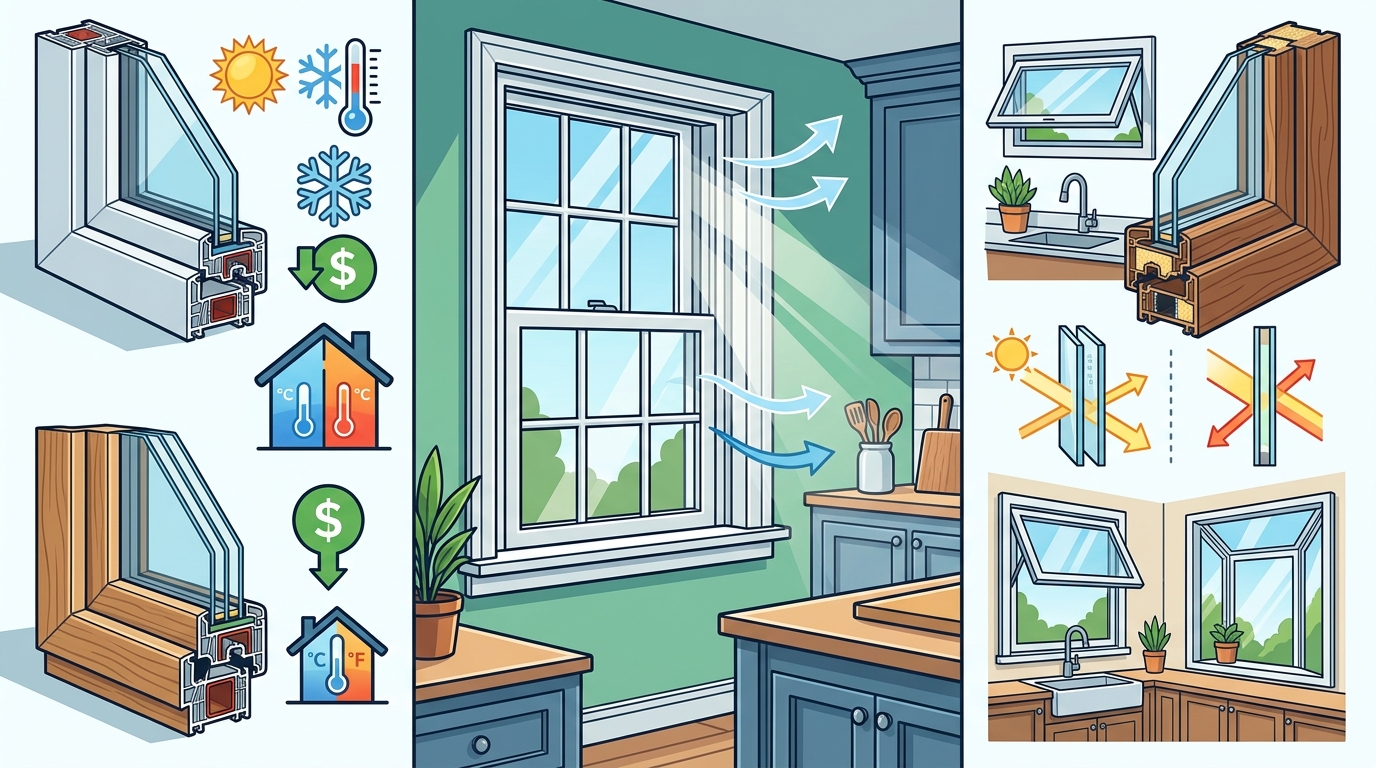
Wood frames offer classic aesthetics but require regular maintenance to prevent moisture damage. Vinyl frames provide excellent insulation and resist warping in humid environments. Aluminum frames deliver slim profiles that maximize glass exposure while supporting heavy glazing units. Fiberglass frames combine structural strength with thermal efficiency for extreme temperature zones.
Wood is a natural composite harvested from timber that requires sealing and painting to maintain structural integrity. Vinyl is a synthetic polymer manufactured through extrusion that resists moisture absorption and fading. Aluminum is a lightweight metal alloy processed through anodization that provides exceptional durability and slim sightlines.
Homeowners should inspect warranty coverage before committing to a specific material. Extended manufacturer guarantees often cover glass fogging and frame separation. You can explore our professional window replacement services to ensure proper material selection for your specific climate zone.
Selecting Glass Configurations
Single pane glass lacks modern insulation standards and increases heating costs significantly. Double pane glass creates an insulating air gap that reduces heat transfer across the frame. Triple pane glass adds an extra layer of insulation for regions with extreme seasonal temperature swings.
Low emissivity coating is a microscopic metallic layer applied to glass that reflects infrared heat while allowing visible light to pass through. Argon gas is an inert chemical element injected between glass panes that reduces convection currents and improves thermal resistance. Clear glass is transparent material that maximizes daylight penetration but offers minimal thermal protection.
Consulting with a certified installer helps you match glass specifications to your regional climate. You can review our company background and service history to understand how we handle complex glazing requirements.
Assessing Operational Mechanisms
Fixed windows provide maximum glass area but cannot be opened for ventilation. Casement windows feature side hinges that swing outward to create excellent cross ventilation. Double hung windows utilize sliding sashes that allow top and bottom airflow control.
Sliding windows are horizontal glass panels mounted on tracks that move laterally to create ventilation openings. Awning windows are hinged at the top that swing outward to shed rain while maintaining airflow. Tilt and turn windows are multi-directional glass units that open inward for cleaning or outward for ventilation.
Consider your daily usage patterns when selecting an operational style. High traffic kitchens benefit from easy-to-clean tilt mechanisms. You can schedule a custom design consultation to evaluate which mechanism fits your workflow.
Calculating Energy Performance
Energy efficiency ratings determine how well a window maintains indoor temperatures. The National Fenestration Rating Council establishes standardized testing protocols for all residential glass products. These metrics help homeowners compare products across different manufacturers.
U factor measures the rate of non-solar heat flow through the window assembly. Solar heat gain coefficient tracks the fraction of incident solar radiation admitted through the glass. Visible transmittance indicates the percentage of daylight that passes through the glazing unit.
Lower U factors indicate superior insulation performance during cold months. Higher solar heat gain coefficients benefit northern climates by capturing passive warmth. You can explore our detailed project gallery to see how we integrate energy metrics into every installation.
Matching Architectural Style
Traditional homes often require divided lite patterns that mimic historic grid designs. Modern architecture favors uninterrupted glass panels that emphasize clean geometric lines. Craftsman styles typically utilize wood frames with subtle muntin configurations.
Grid patterns are decorative strips applied to glass that create traditional divided lite appearances. Muntins are structural or decorative bars that separate glass panes within a single frame. Grid patterns are decorative strips applied to glass that create traditional divided lite appearances.
Architectural consistency prevents costly retrofits and maintains property value. You can review our kitchen remodeling portfolio to see how we align window styles with existing cabinetry and flooring.
Comparing Installation Options
Full frame replacement involves removing the entire existing unit including the sill and trim. Pocket installation places a new window inside the existing frame without removing the outer structure. Retrofit kits offer budget friendly solutions for frames that remain structurally sound.
Full frame replacement is a comprehensive installation method that removes the existing window including the frame, sill, and exterior trim to expose the rough opening. Pocket installation is a cost effective method that places a new window inside the existing frame without removing the outer structure. Retrofit kits are budget friendly solutions designed for frames that remain structurally sound and require minimal structural alteration.
Professional installation prevents air leaks and water intrusion that compromise long term performance. You can request a free project estimate to compare installation methods for your specific property.
Comparing Window Specifications
| Frame Material | Insulation Rating | Maintenance Level | Best Use Case |
|---|---|---|---|
| Wood | High | Regular | Historic renovations |
| Vinyl | Very High | Minimal | Standard replacements |
| Aluminum | Moderate | Low | Modern commercial styles |
| Fiberglass | Very High | Minimal | Extreme climate zones |
Key Takeaways
- Wood frames require annual sealing to prevent moisture damage and maintain warranty coverage.
- Vinyl frames resist warping and provide excellent thermal insulation for humid environments.
- Aluminum frames deliver slim profiles that maximize glass exposure while supporting heavy glazing units.
- Fiberglass frames combine structural strength with thermal efficiency for extreme temperature zones.
- Low emissivity coatings reflect infrared heat while allowing visible light to pass through.
- Argon gas injection reduces convection currents and improves thermal resistance between panes.
- Professional installation prevents air leaks and water intrusion that compromise long term performance.
Frequently Asked Questions
What is the average lifespan of kitchen windows?
Quality windows typically last between twenty and thirty years before requiring full replacement. Proper maintenance and professional installation extend the functional lifespan significantly.
How do I calculate the correct window size for my kitchen?
Measure the rough opening width and height while accounting for frame thickness and trim allowances. Standard sizing reduces manufacturing costs and installation time.
Are double pane windows worth the investment?
Double pane configurations reduce heat transfer and lower utility expenses across all climate zones. The initial cost typically pays for itself within five years through energy savings.
Can I replace kitchen windows without removing drywall?
Pocket installation methods preserve existing interior finishes while upgrading the glass assembly. This approach minimizes renovation disruption and reduces cleanup requirements.
What warranty coverage should I expect from manufacturers?
Industry standards typically cover glass fogging and frame separation for twenty to twenty five years. Labor warranties vary by installer but often range from one to five years.
How does window orientation affect kitchen lighting?
Southern exposures capture maximum daylight throughout the day while increasing cooling loads. Eastern and western orientations provide softer morning and afternoon light with moderate heat gain.
Is professional installation required for warranty validation?
Most manufacturers require certified installers to validate product warranties and performance guarantees. DIY installations often void coverage and leave homeowners responsible for future repairs.
Ready to Upgrade Your Kitchen?
Transform your cooking space with professionally selected and installed windows that enhance both aesthetics and performance. Our certified team evaluates your architectural style, climate requirements, and budget constraints to deliver a seamless upgrade. Schedule your complimentary design consultation today and receive expert guidance tailored to your property. Contact us at (559) 358-2600 to begin your renovation project.