
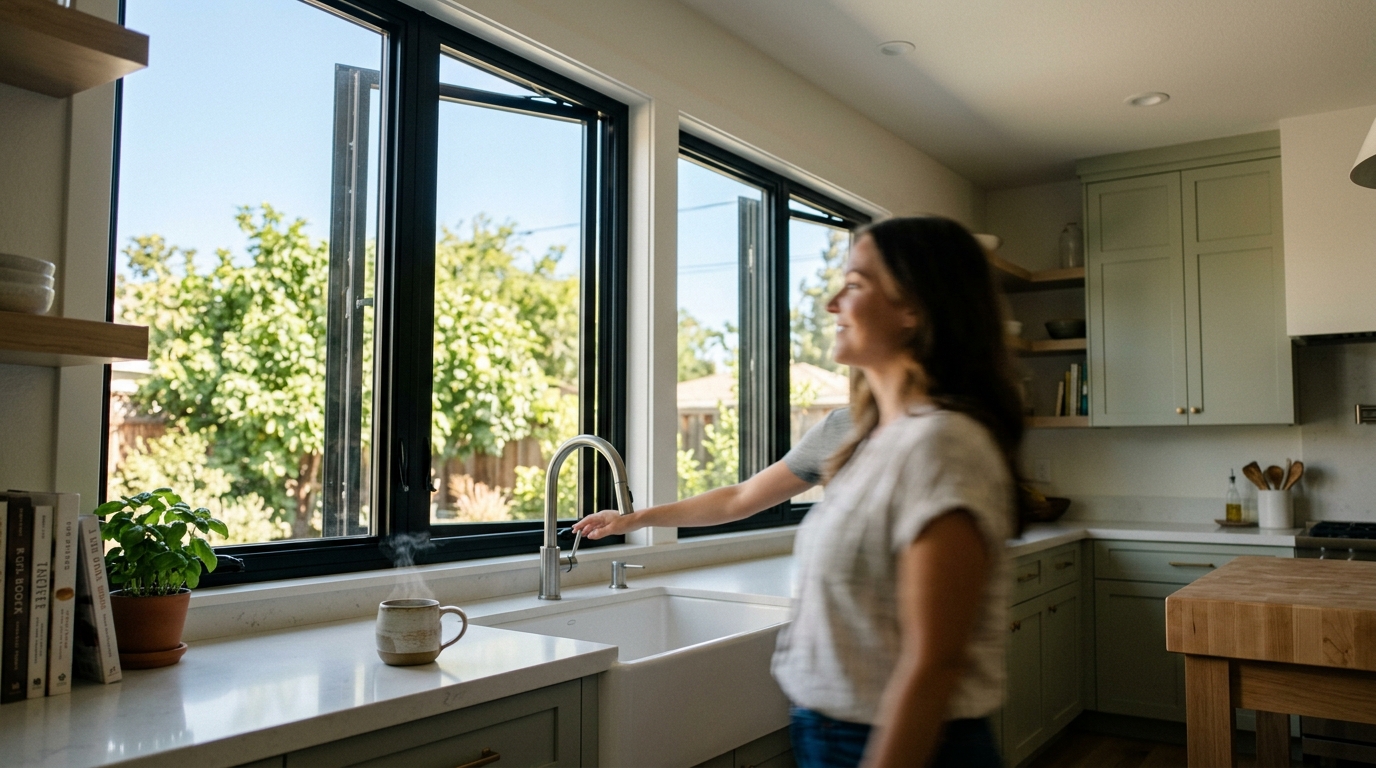
Kitchens are the heart of the home, yet they are often overlooked when it comes to natural light and ventilation. According to the National Association of Realtors, kitchen updates remain one of the top three home improvement projects that yield the highest return on investment for homeowners. However, the wrong window choice can lead to drafts, condensation issues, and poor energy efficiency. This guide walks you through the critical factors to consider when selecting windows for your kitchen renovation. (About Us Fresno Remodeling)
Understanding Kitchen Window Types
The first step in choosing the right window is understanding the different styles available. Each type offers unique benefits for ventilation, light, and aesthetics. In the Central Valley, where temperatures can fluctuate significantly, selecting the correct style is crucial for comfort. (Fresno Bathrooms Kitchens Windows)
Double-Hung Windows
Double-hung windows are a classic choice for kitchens. They feature two sashes that slide vertically. This design allows for excellent ventilation control, as you can open the top or bottom sash independently. They are also easy to clean from the inside, which is a significant advantage for high-traffic areas like the kitchen. (Fresno Bathrooms Kitchens Windows)
Sliding Windows
Sliding windows, also known as gliding windows, move horizontally along a track. They are ideal for kitchens with limited exterior space, such as those near walkways or tight patios. Sliding windows provide a wide, unobstructed view and are generally more affordable than other styles. (Fresno ADU Accessory Dwelling)
Picture Windows
Picture windows are fixed and do not open. They are designed to let in maximum natural light. In a kitchen, a picture window above the sink or stove can create a bright, inviting atmosphere. However, they do not provide ventilation, so they are often paired with operable windows. (Blog Fresno Home Improvements)
Awning Windows
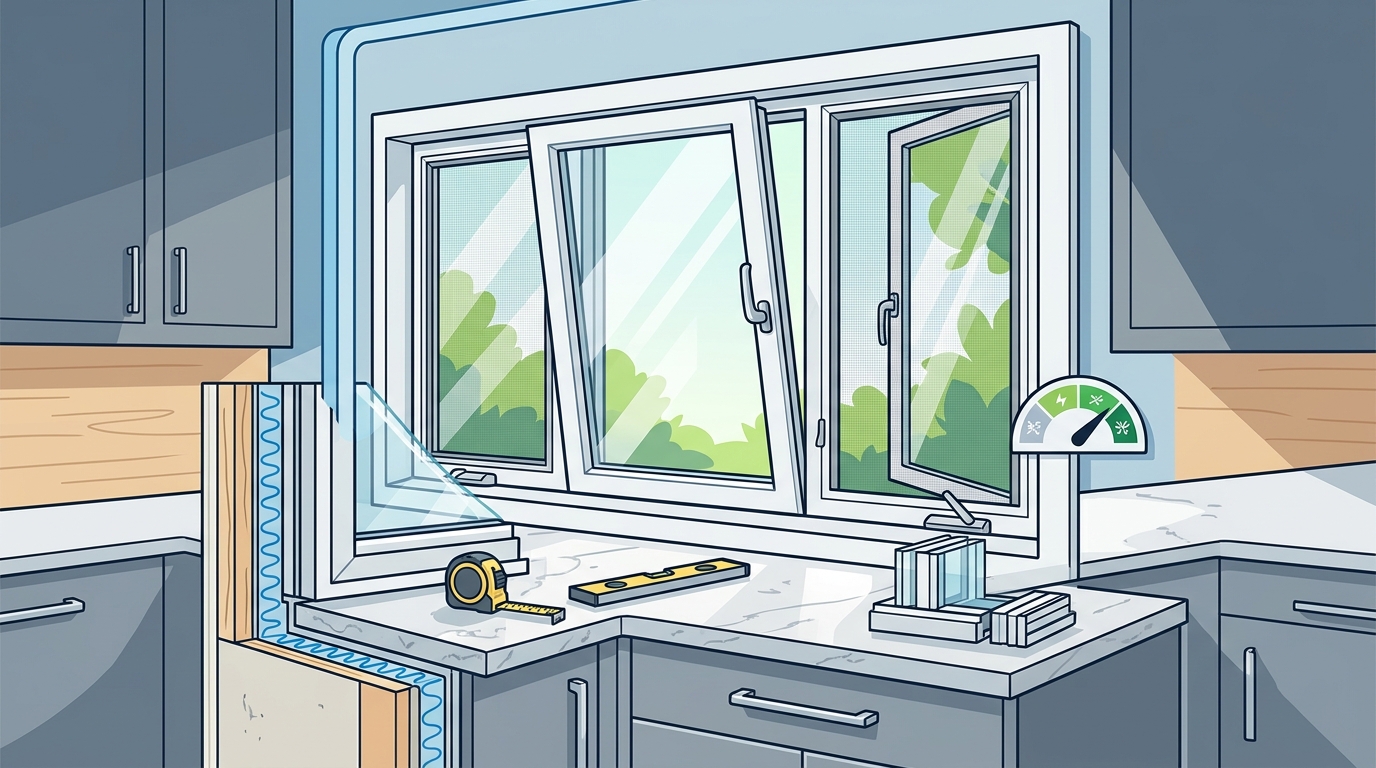
Awning windows hinge at the top and open outward. They are excellent for rain protection, allowing you to ventilate your kitchen even during light showers. This makes them a practical choice for kitchens in areas with frequent rainfall.
Evaluating Energy Efficiency
Energy efficiency is a critical factor in window selection. Poorly insulated windows can lead to higher utility bills and discomfort. When evaluating windows, look for the following metrics.
U-Factor
The U-factor measures how well a window prevents heat from escaping. A lower U-factor indicates better insulation. In colder climates, a U-factor of 0.30 or lower is recommended. For the Central Valley, a moderate U-factor is sufficient due to the milder winters.
Solar Heat Gain Coefficient (SHGC)
The SHGC measures how much solar radiation passes through the window. A lower SHGC reduces cooling loads in hot climates. In Fresno, CA, a lower SHGC is beneficial to keep the kitchen cool during summer months.
Low-E Coatings
Low-emissivity (Low-E) coatings are microscopically thin, transparent layers that reflect infrared light. This helps keep heat inside during winter and outside during summer. Low-E coatings are a standard feature in high-quality windows and are highly recommended for kitchen renovations.
Material Selection Guide
The material of the window frame affects durability, maintenance, and aesthetics. Common materials include vinyl, wood, and fiberglass.
Vinyl Windows
Vinyl windows are popular for their affordability and low maintenance. They are resistant to moisture and do not require painting. Vinyl is also a good insulator, making it a practical choice for kitchens.
Wood Windows
Wood windows offer a classic, natural look that complements traditional kitchen designs. However, they require regular maintenance to prevent rot and warping. Wood is also more expensive than vinyl or fiberglass.
Fiberglass Windows
Fiberglass windows are known for their strength and durability. They expand and contract less than vinyl or wood, which helps maintain a tight seal. Fiberglass is also paintable, allowing for customization to match any kitchen decor.
Placement and Function
The location of the window in the kitchen affects its function. Consider the following placement strategies.
Above the Sink
Placing a window above the sink is a common and practical choice. It provides natural light while washing dishes and offers a view of the outdoors. This placement also helps with ventilation, as steam from the sink can escape more easily.
Above the Stove
A window above the stove can help with ventilation by allowing heat and odors to escape. However, ensure the window is not directly over the burners to avoid safety hazards. Awning windows are a good choice for this location.
Corner Windows
Corner windows can maximize natural light and provide a unique aesthetic. They are ideal for kitchens with open floor plans, as they help blend the indoor and outdoor spaces.
Comparing Window Options
To help you make an informed decision, here is a comparison of common window types for kitchen renovations.
| Window Type | Ventilation | Light | Maintenance | Best For |
|---|---|---|---|---|
| Double-Hung | High | Medium | Low | Classic kitchens |
| Sliding | Medium | High | Low | Space-constrained areas |
| Picture | None | Very High | Very Low | Maximizing light |
| Awning | High | Medium | Low | Rainy climates |
Key Takeaways
- Ventilation is Key: Choose operable windows like double-hung or awning styles to manage heat and odors in the kitchen.
- Energy Efficiency Matters: Look for Low-E coatings and appropriate U-factors to reduce energy bills.
- Material Durability: Vinyl and fiberglass offer low maintenance and high durability for kitchen environments.
- Strategic Placement: Position windows above sinks or stoves for functional benefits.
- Professional Installation: Proper installation is critical for performance and longevity.
- Local Expertise: Work with a local remodeling company familiar with Fresno, CA climate conditions.
- Warranty Coverage: Ensure the windows come with a strong warranty for peace of mind.
Frequently Asked Questions
What is the best window style for a small kitchen?
Sliding windows are often the best choice for small kitchens because they do not swing open and save space. They also provide a wide view and allow for good ventilation.
How do I improve energy efficiency in kitchen windows?
Choose windows with Low-E coatings, double or triple glazing, and proper insulation. Look for windows with a low U-factor and appropriate SHGC for your climate.
Can I install windows above my kitchen sink?
Yes, installing windows above the sink is a popular and practical choice. It provides natural light and ventilation while you work at the sink.
What is the difference between vinyl and wood windows?
Vinyl windows are low maintenance and affordable, while wood windows offer a classic aesthetic but require more upkeep. Vinyl is also a better insulator than wood.
How long does window installation take?
Window installation typically takes one to two days, depending on the number of windows and the complexity of the project. Professional installers ensure a tight seal and proper alignment.
Do I need permits for kitchen window replacement?
Permit requirements vary by location. In Fresno, CA, it is advisable to check with local building authorities. A reputable remodeling company can handle the permit process for you.
What is the average cost of kitchen window replacement?
The cost varies based on the window type, material, and size. On average, homeowners can expect to pay between $300 and $1,000 per window, including installation. Financing options are often available.
Ready to Upgrade Your Kitchen?
Choosing the right windows for your kitchen renovation is a significant decision that impacts your home's comfort, efficiency, and value. At DC Home Improvements, we specialize in high-quality window installation and kitchen remodeling services in Fresno, CA, and the surrounding Central Valley areas. Our team of experts is dedicated to delivering exceptional service and skill. Contact us today to schedule a free estimate and transform your kitchen with the perfect windows.